Food & Organic Waste Bins Sydney
A food organics or FOGO service keeps food waste separate from general waste so it can be managed as its own stream. Australian Waste Services supplies food organics bins in two sizes, 660L and 1100L, and arranges collections for commercial and large residential sites across Sydney.
What is a food organics bin?
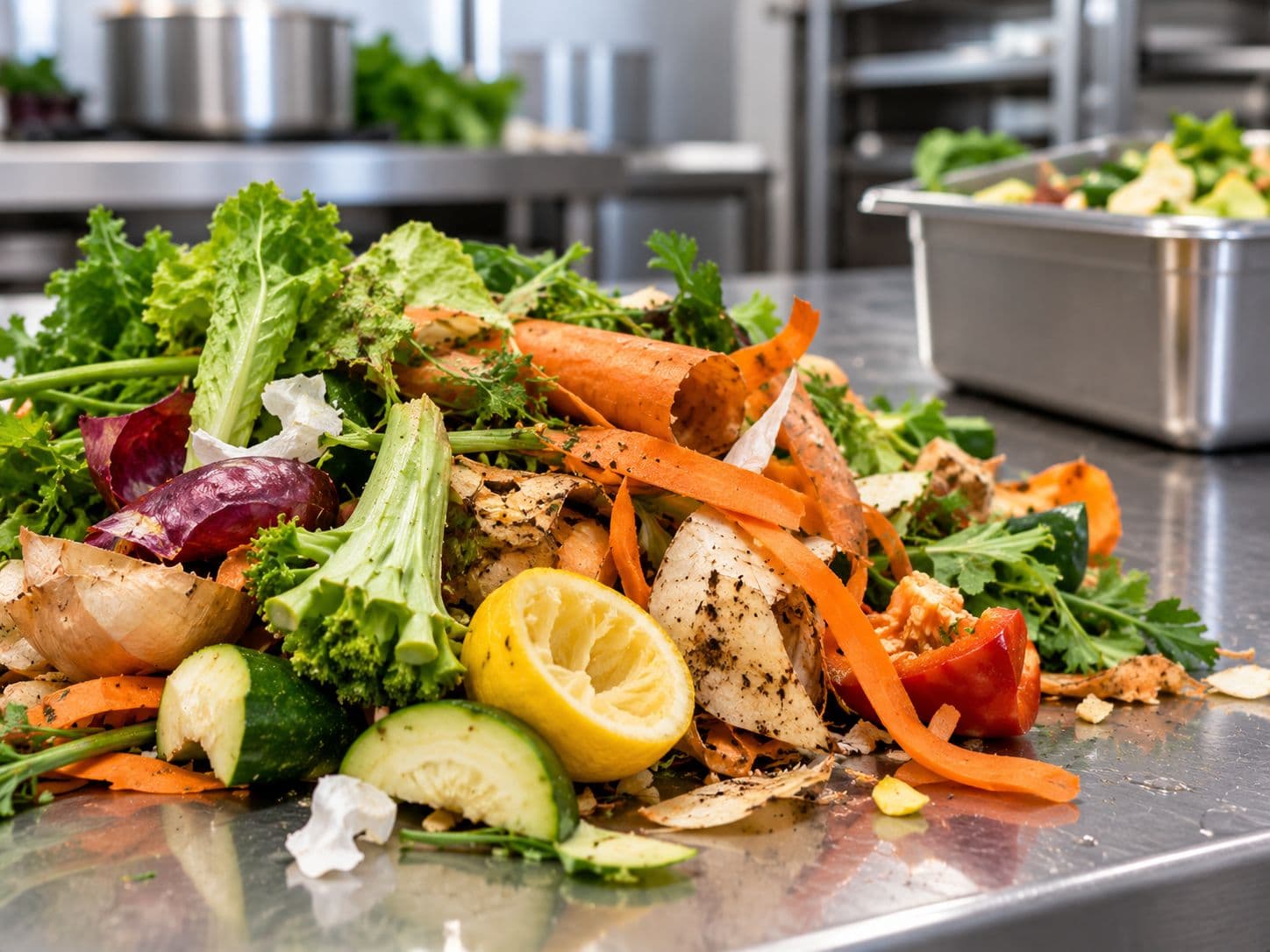
A food organics bin is a dedicated bin for food waste generated during preparation, service and clean-up. In a commercial kitchen that can mean preparation scraps, spoiled ingredients and plate waste. Keeping that material out of the general waste bin gives staff one clear system to follow and supports better resource recovery.
The practical work happens at the point where food is handled. Kitchen, cleaning and building teams need to know which bin is for organics and which material belongs elsewhere. A clear internal process also reduces contamination before the waste reaches the shared bin room, basement or loading dock. If a site produces other recoverable material, a separate recycling service can sit alongside organics and general waste.
Who needs a dedicated service?
Hotels, serviced apartments, restaurants, cafes, food retail premises and commercial kitchens can produce food waste throughout the working day. Large residential buildings may also need a building-wide system that residents and facilities teams can use consistently. The right arrangement depends on where waste is produced, how it moves through the property and where collection can safely take place.
NSW is phasing in mandatory food organics separation for businesses. For many facilities managers, the immediate question is not only how to improve recovery but whether the premises needs to prepare for separate collection. We can discuss the waste stream and the site layout; businesses should also check the current requirements that apply to their operation.
What size food organics bin do I need?
There are two sizes: 660L and 1100L. The 660L bin is the usual choice for food organics, because food waste is heavy for its volume and a smaller bin stays manageable to move from a kitchen to a bin room. The 1100L bin suits sites producing more than a 660L bin holds between collections. Choosing between them should begin with the volume produced between collections, the available storage area and the route staff use to bring food waste to the bin.
Collection frequency matters as much as container capacity. Food businesses may generate uneven volumes across the week, while hotels, serviced apartments and residential buildings may have a steadier flow. A 660L bin collected more often can suit a site better than a 1100L bin collected less often, particularly where the bin has to be wheeled any distance. Tell us where the bin will be stored, when the area can be accessed and what operating pattern the site has. We can then discuss a collection arrangement suited to the premises rather than treating bin size as the only decision.
Basements, loading docks and collection access
Food organics bins are often stored in a basement waste room or loading dock. Vehicle clearance, ramps, turning space, height bars, doors and the position of the collection bay all affect whether a service can be completed. These details should be checked before a collection arrangement is set.
Our specialist low-clearance vehicles are intended for underground car parks, basement waste bays and other restricted commercial sites where a conventional waste truck may not be suitable. Read about our low-clearance and difficult-access collections, then contact the team with the address, bin location and any known clearance constraints.
Related waste services
Commercial waste collection · Recycling and resource recovery · Low-clearance and difficult-access collections
Need a Better Waste Solution?
From everyday collections to complex sites and specialist access requirements, Australian Waste Services has the experience and capability to help.
Australian Waste Services — Reliable. Flexible. Responsive.